The recent dramatic rout of the U.S.-backed Transitional Federal Government (TFG) of Somalia’s forces in the Somali capital of Mogadishu by militias loyal to the al-Qaeda-linked al-Shabaab group and the latter’s ensuing rapid expansion into much of southern Somalia has caught the world by surprise. Thus, the Islamists’ sudden rise as a force in the land to be reckoned with has alarmed the U.S. that Somalia might become “a haven for terrorists.” Faced with the unwelcome prospect of an Islamic jihadist takeover in Somalia, America has rushed in with munitions and logistics to the tune of $5 m to bolster the tottering TFG, headed by interim president Sheikh Shariif Sheikh Ahmed (1) Admittedly, 5m is peanuts by American standards, but it signals the beginning of a sliding slope--American advisors have a way of following American money for arms, a phenomenon that foreign policy wonks refer to as “Mission Creep” (MC).
The driving force behind the U.N-U.S. obsession to re-create a central government for Somalia is rooted in the West's fear that: 1. stateless--and therefore, in their stated view, lawless--Somalia might become a "Nursery" for "Terror International," especially given the various cells of al-Qaeda-linked jihadists lurking in Somalia, and in the recesses of rogue nations, like nearby Yemen, and 2. the global nightmare of Somali highwaymen on the high seas will end only when Somalia enjoys a government with sufficient resources to patrol its coastal lines. The former is especially urgent, they argue, in view of the fact that the al-Qaeda-connected-al-Shabaab Somali terrorists already control large swaths of Somalia, including much of the capital of Mogadishu. Let's speak to each of these concerns individually.
Read here


The Islamist clerics of Ahlu Sunna Waljama'a have denounced the transitional government for the responsibility of yesterday's deadly shelling that left the lives of more people in the capital, official told Shabelle radio on Monday.
Heavy shelling targeted to Bakara market had killed more and injured many innocent civilians as the shellfire continued yesterday afternoon.
"The first or second step of talks with the government will be to decrease the dying people, the shelling, because what is going on can not be tolerated. And the remained innocent civilians can not bear the heavy shelling," said Sheik Abu Yusuf

| The U.S., European Union and their African allies are training and equipping the security forces of Somalia’s Transitional Federal Government to try to take back the parts of Mogadishu now under the control of an Al-Qaeda affiliate. Large portions of the city, known to most Americans as the site of the 1993 ambush that prompted the withdrawal of U.S. forces from the country, is controlled by the al-Shabaab terrorist group. Should Al-Qaeda and its allies succeed in seizing Somalia, they will be able to resurrect the network they lost in Afghanistan and activate their Somali networks in the West to deadly effect. Recent incidents show the terrifying reach of al-Shabaab. An individual in Virginia named Anthony Joseph Tracy that admits having contact with the terrorist group is known to have smuggled 270 Somalis into the U.S., all of whom are believed to remain in the country and have proven extremely difficult to identify. It is improbable that al-Shabaab would use its resources to sneak random Somalis into the country. The odds are that these are their recruits and they are being used to establish sleeper cells in our midst. Considering that less than 20 terrorists were needed to execute 9/11, the number of nearly 300 could have catastrophic consequences. A law enforcement report reveals that 23 Somalis suspected of being connected to al-Shabaab were arrested in Mexico early in the year as they planned to enter the United States. The Mexican authorities released the group on January 21, despite the fact that only 16 had been identified. One of those arrested was Mohamed Osman Noor, a member of al-Shabaab. It is not clear why the Mexicans released them but it is more than likely that the Somalis made their trip to the U.S. as they intended, albeit a little later than they had hoped. Read here | ||

U.S.-based Human Rights Watch (HRW) said the intervention of foreign governments in Somalia, including some represented in the contact group, has often proved counterproductive to promoting the security of civilians.
"The Cairo meeting is an important opportunity for the key international players to begin to fix their broken policies on Somalia," said Georgette Gagnon, HRW Africa director.
"The place to start is to support an international commission of inquiry into abuses by all sides," Gagnon said. She said abuses by Somalia's transitional government, African Union forces, and armed opposition groups should be stopped.
The International Contact Group, which brings together governments and intergovernmental institutions including the United States, European states, the African Union, the Arab League, and the United Nations to coordinate policy on Somalia, will meet on April 21-22 in Cairo, Egypt.
Read here
Somali pirates hijacking vessels at sea have become an almost daily occurrence. But the latest incident is raising the alarm far from the East African coast.
It is a scenario that has become all but routine – an act of piracy on the high seas by Somalis. This time the pirates have hijacked three fishing vessels from Thailand (and operating from Djibouti) with a total crew of 77 Thais aboard the ships. But what is unusual is that it has taken place more than 1,900 kilometers east of the African coast.
Commander John Harbour is at the European Union's Naval Force Maritime Security Center in London.
Read more


According to Spanish Secretary of State for Foreign Affairs Angel Losada, the international conference on Somalia is scheduled to be held in Istanbul in mid-May.
The Spanish foreign minister said on Tuesday that the conference would also be examining the effects of international assistance to the interim government of Somalia, the Anatolia news agency reported.
Losada also stated that the idea of an international conference on Somalia was first put forward last year by Spanish Prime Minister Jose Luis Rodriguez Zapatero and French President Nicolas Sarkozy.
Somalia has been beset by unrest since the 1991 ouster of dictator Mohamed Siad Barre.
In addition, the Somali coast has been infested by piracy in recent years.
Attacks by heavily-armed Somali raiders in speedboats have prompted foreign navies to patrol the Gulf of Aden and the Indian Ocean and to provide escorts for commercial vessels travelling in the area.
A Kenyan assistant minister warns that the current political squabbling in Somalia parliament would lead to collapse of the fragile Un-backed Somali government if not addressed urgently.
Aden Barre Duale, Kenya's assistant minister for livestock, has called on the top leadership of the Somali TFG to take control of the situation and help mediate between the feuding political opponents in the parliament.
"The TFG leaders should urgently intervene between lawmakers to stop the dispute, if they fail to do so, then the government would certainly collapse," he said
"The lawmakers should go back to the law, because arguing about the expiry of the term of the parliament would not be a good idea. It is best for them to go back to the law that they set, and follow it," he added.
Duale said Kenya, like any other Somalia’s friend, would play its role in making sure that the current transition administration would not be another failed attempt to bring peace and stability to the war-torn country.
Read here

News round-up: Museveni hopes NDP has set Uganda on the path to become a middle-income country; Uganda maternal mortality rates among highest in world; religious leaders caution over condoms; farmers urged to go organic
President Yoweri Museveni yesterday outlined a series of proposals intended to firmly set Uganda on the path to becoming a middle-income country.
Unveiling the country's five-year National Development Plan (NDP), Museveni put infrastructure and the private sector at the heart of his proposals to increase the country's earning capabilities between now and 2015.
According to reports, the NDP aims to increase the annual earning potential of all Ugandans by around UShs 800,000 a year (around $380), from the UShs 1m to UShs 1.8m, over the next five years.
The Daily Monitor said the implementation of the plan will see the proportion of people living below the poverty line will fall from 31% to 25%.
Read here

A row has erupted between Ethiopia and the government of Djibouti over the latter’s promulgation of a new directive, issued last week, that will see Ethiopia lose millions of dollars in port operations.
The directive establishes a monopoly, in favor of Maersk Djibouti Freight Station, over operations involving the stuffing and unstuffing of containers at the Djibouti port.
The operation, which was hitherto handled by all forwarding companies, could cost Ethiopia some 9 million dollars per year.
Talking to a local newspaper, Fortune, Mekonnen Abera, director general of Ethiopian Port Affairs Authority said the directive violates a 2002 bilateral agreement between the two countries.
Under the agreement, Djibouti is expected to provide Ethiopia with a 60 day notification prior to price increments or actions that affect the port’s operations.
“It is a huge decision. We need to talk and want the case to remain pending in the meantime,” Mekonnen said ahead of a planned official visit to Djibouti, next week, to closely examine the issue with his Djibouti counterpart.
Ethiopian Freight Forwarders and Shipping Agents Association have also complained about the directive.
In a letter addressed to Aden Ahmed Dualeh, board chairman of Djibouti port authority, the association argues that third party handling in what concerns container stuffing and unstuffing operations could lead to a confusion over who should bear responsibility in case of damage, shortage or mixing of cargos.
In line with the directive, Maersk has already imposed a 100 dollar tariff per container that enters its premises for stuffing or unstuffing.
Ethiopia has an average of 100,000 in-bound containers unstuffed and an average of 30,00-40,000 out-bound containers stuffed at the Djibouti port per

CAIRO — Egypt insisted Monday on its traditional share of the Nile river and warned basin countries against signing a water-sharing agreement in which it is excluded.
The warning came days after Nile basin countries meeting in Egypt failed to agree on a framework to reallocate shares from the river, a longstanding demand by several up-stream countries.
"Egypt's share of the Nile's water is a historic right that Egypt has defended throughout its history," Mohammed Allam, minister of water resources and irrigation, told parliament.
Allam added that Egypt saw the matter as a national security issue.
"Egypt reserves the right to take whatever course it sees suitable to safeguard its share," he said.
"If the Nile basin countries unilaterally signed the agreement it would be considered the announcement of the Nile Basin Initiative's death," Allam added.
The Nile Basin Initiative, the World Bank funded umbrella group of Nile basin countries, has put off signing a water sharing pact over objections from Egypt and Sudan.
At the heart of the dispute is a 1929 agreement between Egypt and Britain, acting on behalf of its African colonies along the 5,584-kilometre (3,470-mile) river, which gave Egypt veto power over upstream projects.
An agreement between Egypt and Sudan in 1959 allowed Egypt 55.5 billion cubic metres of water each year -- 87 percent of the Nile's flow -- and Sudan 18.5 billion cubic metres.
Some of the Nile Basin countries, which include Ethiopia, Tanzania, Uganda, Kenya and the Democratic Republic of Congo, say past treaties are unfair and they want an equitable water-sharing agreement that would allow for more irrigation and power projects.
Egypt, a mostly arid country that relies on the Nile for the majority of its water, argues up-stream countries could make better use of rainfall and have other sources of water.
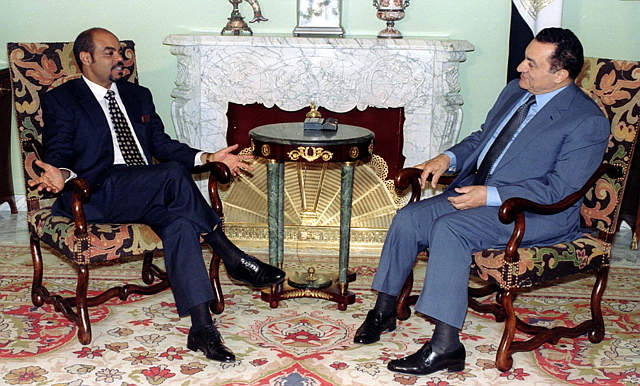
WASHINGTON (Reuters) - The Pentagon plans to boost U.S. military assistance to Yemen's special operations forces to lead an offensive targeting al Qaeda in the Arabian Peninsula, officials said on Tuesday.
Defense Secretary Robert Gates in February authorized $150 million in security assistance for Yemen for fiscal 2010, up from $67 million last year, but the Pentagon has offered few details about the highly sensitive program.
Officials briefed on the matter said the Pentagon informed Congress that it would provide $34 million in "tactical assistance" to Yemen's special operations forces.
"Special Operations forces are uniquely qualified for counterterrorism missions," a U.S. defense official said of the funding. "The United States wants to work with partners in the region to address their terrorist threats."
Read here

NAIROBI, Kenya — Shipping companies with U.S. interests don't know if they are allowed to pay ransoms to Somali pirates anymore after President Obama declared them an "extraordinary threat," even as pirates extended their reach farther than ever toward Asia, hijacking three Thai vessels, officials said Tuesday.
A total of 77 crew members were taken Sunday in the hijackings 1,200 miles (1,900 kilometers) east of Somalia in the Indian Ocean — the farthest from the Somali coast pirates have ever attacked, the EU Naval Force said. Pirates now hold 14 vessels and 305 hostages, the International Maritime Bureau said.
read here

This report from the International Crisis Group examines the potential for conflict in Ethiopia ahead of the June 2010 elections as ethnic tensions and dissent rises. The report urges the international community to encourage more meaningful democratic governance in the country.
The Ethiopian Peoples' Revolutionary Democratic Front (EPRDF), led by its chairman and prime minister, Meles Zenawi, has radically reformed Ethiopia's political system. The regime transformed the hitherto centralised state into the Federal Democratic Republic and also redefined
citizenship, politics and identity on ethnic grounds. The intent was to create a more prosperous, just and representative state for all its people. Yet, despite continued economic growth and promised democratisation, there is growing discontent with the EPRDF's ethnically defined state and rigid grip on power and fears of continued interethnic conflict. The international community should take Ethiopia's governance problems much more seriously and adopt a more principled position towards the government. Without genuine multi-party democracy, the tensions and pressures in Ethiopia's polities will only grow, greatly increasing the possibility of a violent eruption that would destabilise the country and region
Read here
NAIROBI, Kenya — When Kenneth Maundu, general manager for Sunripe produce exporters, first heard about a volcano erupting in Iceland, he was excited. “I thought, ‘Oh, wow, a volcano,’ ” he said.
And then reality hit him in the face like a hurled tomato.
Because Kenya’s gourmet vegetable and cut-flower industry exports mainly to Europe, and because the cloud of volcanic ash has grounded flights to much of northern Europe since Thursday, its horticultural business has been waylaid as never before.
read here

I hereby forward to the Transitional Federal Government (TFG) institutions, wider Somali public and the international community an alternative strategic plan to resolve the catastrophic situation and leadership paralysis long prevailing in Somalia. The current TFG whose term expires August 2011 has totally failed due to lack of national vision, poor leadership and systemic corruption. This government continues to cling to the erroneous opinion that it can implement its mandate by end of its term. It fails to recognize at a great peril to the future of our people the realities on the ground that demand swift and concrete changes of mandate, strategy and the entire modus operandi. TFG’s long publicized military offensive to rout the armed opposition, dubious peace deals and the illegal process of writing new constitution for the country in neighboring countries’ five star hotels are empty measures designed to deflect public opinion so to prolong its stay in office which means continuation of the status quo.
Read more

Every year the US State Department releases its annual Human Rights Report. The report lists and condemns countries whose governments allegedly abuse the human rights of their citizens.
This Year’s “2009 Human Rights Reports: Ethiopia” by the US Department of State, Bureau of Democracy, Human Rights and Labor, was unlike previous ones harsh – in tone and substance - to the government of Ethiopia. The report accuses the Ethiopian regime of engaging in widespread human rights abuses such as “unlawful killings, torture, beating, abuse and mistreatment of detainees,” and host of other horrible crimes. In the Somali Regional State (aka Ogaden),
Read more

Harsh War, Harsh Peace Abuses by al-Shabaab, the Transitional Federal Government, and AMISOM in Somalia
Somalia remains mired in a brutal conflict between the Transitional Federal Government
(TFG), which holds only a sliver of the capital, Mogadishu, and armed opposition groups that
control most of the country. Over the past year hostilities have raged in strategicallyjavascript:void(0)
important areas, including Mogadishu, while much of the rest of Somalia has enjoyed
relative peace.
Both the inhabitants of the shattered capital and those living in more peaceful areas have
endured devastating patterns of abuse. In much of the south, which is largely controlled by
the armed Islamist group al-Shabaab, the population is subject to targeted killings and
assaults, repressive forms of social control, and brutal punishments under its draconian
interpretation of Sharia (Islamic law). Meanwhile, in Mogadishu, mortars fired by al-Shabaab
and African Union troops deployed to protect the internationally-backed TFG continue to kill
civilians and ravage the city. All sides have violated the laws of war by conducting
indiscriminate attacks and other abuses.
Read here

MOGADISHU, Somalia — Two Somali radio stations say the government has ordered them to close for obeying a week-old order by an Islamic militant group to stop playing music.
Officials at Somaliweyn and Tusmo radio stations say they won't obey the government order to resume playing music and shut down Tuesday.
Abukar Mohamed Hassan Kadaf of Somaliweyn says the National Security Agency called the station executives to a meeting and later sent them a letter with the order.
Hizbul Islam ordered more than a dozen stations to stop playing music on April 13. The stations have had to re-record their ads. Some are using gunfire, car horns and animal cries to act as a bridge between programs.
Somalia has not had an effective government for 19 years.

The rival Islamist fighters of Al-shabab Mujahideen and Ahlu Sunna Waljama’ claimed victory over fighting between the two sides that continued in Galgudud region in central Somalia, officials said on Tuesday.
Read here

Cairo, 20 April – The UN Special Representative for Somalia, Ahmedou Ould-Abdallah, is in Cairo to chair the 17th meeting of the International Contact Group from 21 to 22 April 2010. In addition to the founding members, Norway and the US, representatives from more than 50 countries and international organizations are attending
Read here


