Showing posts with label politics. Show all posts

What's the matter with the world today?


People like me tend to focus on problems, mostly because we are interested in finding ways to address them and thereby improve the human condition. Nonetheless, we should occasionally remind ourselves that all is not doom-and-gloom. In fact, there are plenty of reasons to be cautiously optimistic about the state of the world today, and maybe even about the future. The overall level of global violence is at historic lows (despite some tragic conflicts that still defy solution), the world economy has done very well over the past half-century (despite its recent problems) and life expectancy, public health, and education levels have risen dramatically in many parts of the world (though conditions in a few places have deteriorated badly).

So Cassandra-like pessimism may not be appropriate, even for a realist. Nonetheless, I am beginning to wonder if our

ability to deal with various global problems is decreasing, mostly due to the deterioration of political institutions at both the global and domestic level. Here are some tentative thoughts in that direction.

One way to think about the current state of world politics is as a ratio of the number of important problems to be solved and our overall "problem-solving capacity." When the ratio of "emerging problems" to "problem-solving capacity" rises, challenges pile up faster than we can deal with them and we end up neglecting some important issues and mishandling others. Something of this sort happened during the 1930s, for example, when a fatal combination of global economic depression, aggressive dictatorships, inadequate institutions, declining empires, and incomplete knowledge overwhelmed leaders around the world and led to a devastating world war.

Human society is not static, which means that new challenges are an inevitable part of the human condition. New problems arise from the growth of societies, from new ideas, from our interactions with the natural world, and even from the unintended consequences of past successes. As a result, policymakers are always going to face new problems, even when the old ones remain unresolved.

Reade more

Egypt warns against Nile Basin pact


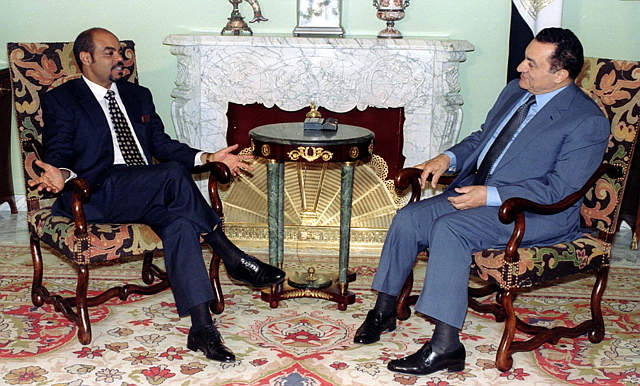
CAIRO — Egypt insisted Monday on its traditional share of the Nile river and warned basin countries against signing a water-sharing agreement in which it is excluded.

The warning came days after Nile basin countries meeting in Egypt failed to agree on a framework to reallocate shares from the river, a longstanding demand by several up-stream countries.

"Egypt's share of the Nile's water is a historic right that Egypt has defended throughout its history," Mohammed Allam, minister of water resources and irrigation, told parliament.

Allam added that Egypt saw the matter as a national security issue.

"Egypt reserves the right to take whatever course it sees suitable to safeguard its share," he said.

"If the Nile basin countries unilaterally signed the agreement it would be considered the announcement of the Nile Basin Initiative's death," Allam added.

The Nile Basin Initiative, the World Bank funded umbrella group of Nile basin countries, has put off signing a water sharing pact over objections from Egypt and Sudan.

At the heart of the dispute is a 1929 agreement between Egypt and Britain, acting on behalf of its African colonies along the 5,584-kilometre (3,470-mile) river, which gave Egypt veto power over upstream projects.

An agreement between Egypt and Sudan in 1959 allowed Egypt 55.5 billion cubic metres of water each year -- 87 percent of the Nile's flow -- and Sudan 18.5 billion cubic metres.

Some of the Nile Basin countries, which include Ethiopia, Tanzania, Uganda, Kenya and the Democratic Republic of Congo, say past treaties are unfair and they want an equitable water-sharing agreement that would allow for more irrigation and power projects.

Egypt, a mostly arid country that relies on the Nile for the majority of its water, argues up-stream countries could make better use of rainfall and have other sources of water.

Pentagon to boost Yemen's special operations forces


WASHINGTON (Reuters) - The Pentagon plans to boost U.S. military assistance to Yemen's special operations forces to lead an offensive targeting al Qaeda in the Arabian Peninsula, officials said on Tuesday.

Defense Secretary Robert Gates in February authorized $150 million in security assistance for Yemen for fiscal 2010, up from $67 million last year, but the Pentagon has offered few details about the highly sensitive program.

Officials briefed on the matter said the Pentagon informed Congress that it would provide $34 million in "tactical assistance" to Yemen's special operations forces.

"Special Operations forces are uniquely qualified for counterterrorism missions," a U.S. defense official said of the funding. "The United States wants to work with partners in the region to address their terrorist threats."

Read here

Israelis Debate Striking Iran Without U.S. Consent


ERUSALEM—The Israeli security establishment is divided over whether it needs Washington's blessing if Israel decides to attack Iran, Israeli officials say, as the U.S. campaign for sanctions drags on and Tehran steadily develops greater nuclear capability.

Some officials here fear that Washington is willing to live with a nuclear-armed Iran, an eventuality that Israel says it won't accept. Compounding Israeli concerns were U.S. statements this past weekend that underscored U.S. resistance to a military option. Defense Secretary Robert Gates on Sunday discussed a memo to National Security Adviser James Jones warning that the U.S. needed new strategies, including how to contain a nuclear Iran—suggesting that Iran could reach nuclear capability without any foreign military force trying to stop it.

Adm. Mike Mullen, chairman of the Joint Chiefs of Staff, reiterated Sunday the U.S. position that a military strike against Iran is a "last option."

Read here