CAIRO — Egypt insisted Monday on its traditional share of the Nile river and warned basin countries against signing a water-sharing agreement in which it is excluded.
The warning came days after Nile basin countries meeting in Egypt failed to agree on a framework to reallocate shares from the river, a longstanding demand by several up-stream countries.
"Egypt's share of the Nile's water is a historic right that Egypt has defended throughout its history," Mohammed Allam, minister of water resources and irrigation, told parliament.
Allam added that Egypt saw the matter as a national security issue.
"Egypt reserves the right to take whatever course it sees suitable to safeguard its share," he said.
"If the Nile basin countries unilaterally signed the agreement it would be considered the announcement of the Nile Basin Initiative's death," Allam added.
The Nile Basin Initiative, the World Bank funded umbrella group of Nile basin countries, has put off signing a water sharing pact over objections from Egypt and Sudan.
At the heart of the dispute is a 1929 agreement between Egypt and Britain, acting on behalf of its African colonies along the 5,584-kilometre (3,470-mile) river, which gave Egypt veto power over upstream projects.
An agreement between Egypt and Sudan in 1959 allowed Egypt 55.5 billion cubic metres of water each year -- 87 percent of the Nile's flow -- and Sudan 18.5 billion cubic metres.
Some of the Nile Basin countries, which include Ethiopia, Tanzania, Uganda, Kenya and the Democratic Republic of Congo, say past treaties are unfair and they want an equitable water-sharing agreement that would allow for more irrigation and power projects.
Egypt, a mostly arid country that relies on the Nile for the majority of its water, argues up-stream countries could make better use of rainfall and have other sources of water.
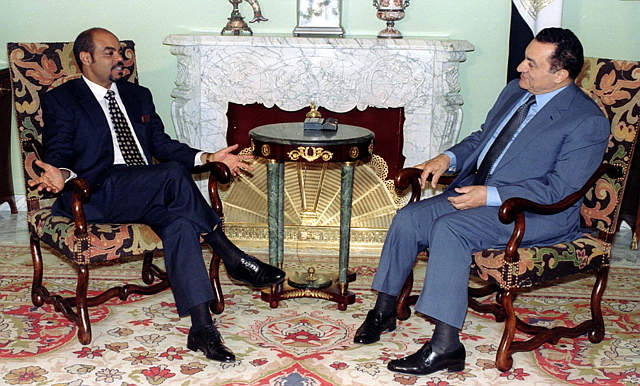

ADDIS ABABA — Ethiopia said Tuesday that it would go ahead with a new deal with six other countries on sharing the waters of the Nile and accused Egypt of "dragging its feet" on a more equitable treaty.
The new agreement replaces a 1929 colonial-era treaty between Egypt and Britain, which gave Egypt veto power over upstream projects. The country also has access to most of the water from one of the world's longest rivers.
"Ethiopia and six other countries in east and central Africa will sign on May 14 a framework agreement on the equitable utilisation of the Nile river," Ethiopian government spokesman Shimelis Kemal told reporters.
"It's a deal based on international customary law, but Egypt is dragging its feet. All seven countries have rejected the previous agreement between Egypt and colonial Britain," he said.
Egyptian Water Resources Minister Mohammed Allam on Monday warned Nile basin countries against inking the deal which excluded his country.
Burundi, DR Congo, Ethiopia, Kenya, Rwanda, Tanzania and Uganda agreed to the new deal on April 13, only to be shunned by both Egypt and Sudan -- the river's two largest consumers.
At the heart of the dispute is the 1929 agreement between Egypt and Britain, acting on behalf of its African colonies along the 5,584-kilometre (3,470-mile) river, which gave Egypt veto power over upstream projects.
An agreement between Egypt and Sudan in 1959 allowed Egypt 55.5 billion cubic metres of water each year -- 87 percent of the Nile's flow -- and Sudan 18.5 billion cubic metres.
Some of the Nile Basin countries say past treaties are unfair and they want an equitable water-sharing agreement that would allow for more irrigation and power projects.
Egypt, a mostly arid country that relies on the Nile for the majority of its water, argues up-stream countries could make better use of rainfall and have other sources of water.

ERUSALEM—The Israeli security establishment is divided over whether it needs Washington's blessing if Israel decides to attack Iran, Israeli officials say, as the U.S. campaign for sanctions drags on and Tehran steadily develops greater nuclear capability.
Some officials here fear that Washington is willing to live with a nuclear-armed Iran, an eventuality that Israel says it won't accept. Compounding Israeli concerns were U.S. statements this past weekend that underscored U.S. resistance to a military option. Defense Secretary Robert Gates on Sunday discussed a memo to National Security Adviser James Jones warning that the U.S. needed new strategies, including how to contain a nuclear Iran—suggesting that Iran could reach nuclear capability without any foreign military force trying to stop it.
Adm. Mike Mullen, chairman of the Joint Chiefs of Staff, reiterated Sunday the U.S. position that a military strike against Iran is a "last option."
Read here


